
Daniel Makina and Rogers Dhliwayo
South Africa’s 2025 Medium-Term Budget Policy Statement (MTBPS) landed with a wave of unusually enthusiastic commentary. Some analysts rushed to praise it as a turning point for fiscal discipline. But the initial excitement recalls the old folklore of rats celebrating the brilliant idea of tying a bell around the cat’s neck; only to realise that none of them could actually carry out the mission. South Africa’s fiscal policy often suffers the same fate: good ideas, weak execution.
The 2025 MTBPS has strong elements, but it also suffers from serious blind spots and lingering structural weaknesses. Here is where the mini-budget gets things right and where it stumbles.
The Good: A Sharper Macroeconomic Compass
The decision to revise the inflation target to 3% is a meaningful and overdue shift. A lower anchor strengthens credibility, suppresses inflation expectations, and supports more predictable wage settlements. Bond markets took notice: yields softened as investors priced in a more credible disinflation path and a slightly stronger rand.
The South African Revenue Services’ (SARS’) improved revenue collection is another bright spot. South Africans deserve a competent tax authority, and recent gains suggest that administrative improvements, rather than brute-force tax hikes are beginning to pay off. However, part of the surge stems from the temporary rise in gold and platinum prices, which lifted revenues as the rand strengthened beyond. Sustainable gains will require expanding the tax base, rebuilding productivity, and reviving investment.
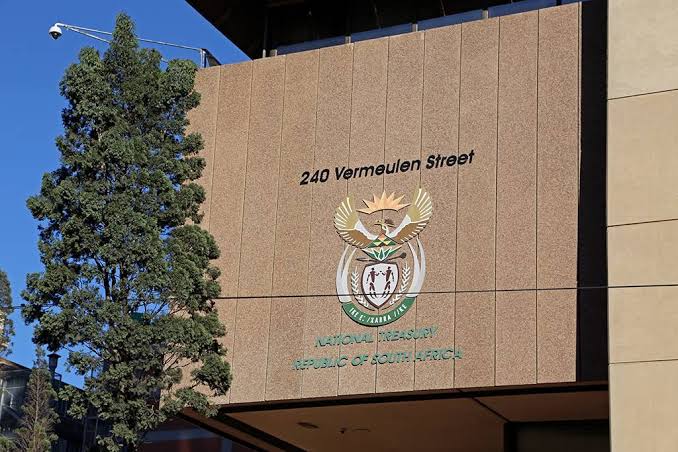
A third major positive is the Targeted and Responsible Savings (TARS) initiative; a systemic reform aimed at shutting off leakages in the public payroll through verification systems and real-time oversight. This is exactly the kind of plumbing reform South Africa needs. With National Treasury battling 8,800 ghost workers, smarter controls can free up billions for genuine public services.
The Bad: Big Promises, Missing Architecture
The government says it will stabilise debt at 77.9% of GDP, but without adopting long-delayed fiscal rules, such claims lack credibility. South Africa has promised debt stabilisation for nearly a decade without any binding instrument – no expenditure rule, no deficit cap, no long-term anchor. Without such a framework, stabilisation is more a political aspiration than a fiscal strategy.
The MTBPS also flags state-owned enterprises (SOEs) as a fiscal risk but does not present a turnaround plan. SOEs continue to absorb public resources without a clear path to reforms in governance, cost management, or operational performance. Not a single structural step comparable to the Eskom unbundling plan or the Transnet Freight Logistics Roadmap was announced.
The Ugly: Growth Downgrade and Hidden Liabilities
National Treasury cut the 2025 GDP growth forecast from 1.4% to 1.2%, a sober admission that the economy remains stuck in a low-growth trap. Logistics bottlenecks, weak energy reliability, and stagnant investment continue to choke recovery. Without higher growth, fiscal consolidation becomes mathematically impossible.
More worrying is National Treasury’s silence on the full picture of state liabilities. Recent analysis shows that South Africa’s contingent liabilities, in particular state guarantees to SOEs amounting to roughly 8.8% of GDP, increase fiscal risks. Although not quantified in the MTBPS, according to the Bureau for Economic Research of Stellenbosch University, if contingent liabilities are added to the national debt, the gross debt-to-GDP ratio could exceed 120%. This omission undermines transparency and gives the public a partial view of fiscal reality.
Labour costs also present a difficult contradiction. Public-sector unions are locked into a forward wage deal of 4.4% annually until 2026/27, well above the new 3% inflation target. This mismatch between wage-setting and the new inflation target puts upward pressure on expenditure and threatens the credibility of the new monetary framework.
Above all, the ugliest truth remains unchanged: South Africa’s implementation deficit. Good policies routinely stumble on poor coordination, weak planning, and slow execution. The TARS initiative, for example, will only succeed if reinforced by interdepartmental cooperation and disciplined monitoring – areas where the state historically struggles.
Where We Go from Here: A Different Kind of Budgeting
To escape this cycle of reactive fiscal firefighting, South Africa needs a new public-finance paradigm: Anticipatory Public Budgeting (APB). Unlike traditional budgeting, which is backward-looking and anchored in last year’s baselines – APB is forward-looking, mission-driven, and rooted in strategic foresight.
As Geoff Mulgan argues, governments cannot merely predict the future; they must prepare for multiple futures. APB shifts the budget process from incremental allocations to purposeful investment in national missions: decarbonisation, infrastructure renewal, youth employment, and digital transformation. It emphasises cross-sector collaboration, complexity thinking, and long-term resilience rather than ad hoc adjustments.
South Africa desperately needs this shift. Debt-service costs already consume more than 20% of total revenue, squeezing out spending on education, public health, safety, and infrastructure. Meanwhile, unemployment, inequality, climate shocks, and digital disruption are accelerating faster than our planning cycles.
The 2025 MTBPS contains promising ideas; but without structural reforms, credible fiscal rules, and a future-oriented budgeting approach, these ideas risk becoming yet another attempt to “bell the cat” without a plan for who will do the belling.
Daniel Makina and Rogers Dhliwayo are editors of Economic Business Insights
