


 |
||||||||||||||||||||||||||||||||||
Consumer financial education in South AfricaAnna Bouhail
|
||||||||||||||||||||||||||||||||||

 ince the establishment of democracy, government policies and initiatives have been aimed at developing a financially inclusive economy by eradicating the racially biased income and social inequalities in our society.
 Financial literacy and consumer protection have been identified as key factors in achieving these goals. Speaking at the opening of the Alliance for Financial Inclusion Global Policy Forum in Cape Town in September 2012, Minister of Finance, Pravin Gordhan stated: “As we continue to foster financial inclusion, consumer protection and financial education are fundamental to our efforts. An environment of poor financial literacy, coupled with a lack of adequate consumer protection, is likely to encourage consumer abuse and inappropriate use of financial services.”(1)
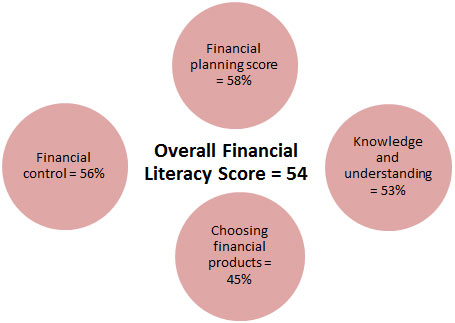
 brought to the surface revealing facts about South Africans’ financial knowledge and behaviour. The baseline survey “Financial Literacy in South Africa”was the first of its kind in South Africa and was commissioned by the Consumer Education Department of the FSB as its own CFE initiatives have been hindered by a lack of data regarding the financial knowledge, attitudes, skills and behaviour of the South African consumer.


 Sector Charter. The FS Code constitutes the foundation on which companies operating in the financial sector will be measured for B-BBEE compliance.
|
Members of the Banking Association of South Africa and Qualifying Small Financial Institutions (QSFI)(4) |
Long term assurers |
Short-term assurers |
Qualifying market |
The target market for consumer education will be individuals in the LSM 1-8 group with the major emphasis on the LSM 1 - 5 category. The LSM 6 - 8 group is included as they were the most affected by the financial crisis. |
The target market for Life products will be based on income and pegged at the tax threshold for individuals and double the tax threshold for families. The target market definition is to be adjusted annually, based on changes to tax threshold. The tax threshold currently stands at just under R60 000 per annum. |
The metric has been broadly based on products aimed at individuals earning below the tax threshold, households with an income below double the tax threshold and Black small businesses and small Black farmers. The target market for individuals and households will be adjusted based on changes to the tax threshold. |
Point allocation |
2 out of 14 |
||
Qualifying criteria |
Consumer, Primary and Basic Education |
||
Range |
National |
||
Products |
Products and services will be closely aligned with the standards, products and services developed and maintained by the FSB as designated owners of consumer education by the National Treasury. Until that alignment has been fully achieved, the current products and services will prevail with the standards as set out under measurements being in force. |
Not specified in Financial Sector Code |
Not specified in Financial Sector Code |
Measurement |
As per the Consumer Education standards as set out in the Guidance Notes. In addition the following shall be adhered to:
|
Not specified in Financial Sector Code |
Consumer Education standards will be determined following the gazetting of the FS Code. |
Targets |
Measurement will be against an annual target of 0.25% for 2012, 0.3% for 2013 and 0.4% from 2014 of retail net profit after tax (NPAT) |
A company will score 2 points for Consumer Education spending of 0.4% of post-tax operating profits and proportionately for anything less. |
Measurement will be against an annual target of 0.25% in year 1, 0.3% for year 2 and 3 and 0.4% from year 4 of retail net profit after tax (NPAT). |
The lack of efficacy of the CFE initiatives has been attributed to a number of structural issues, which include
- the lack of co-ordinated and consistent legislative interventions in consumer financial education. Various government departments and institutions have been given legislative mandates to promote and/or implement financial education programmes for consumers
- current consumer financial education programmes in South Africa are fragmented, lack impact and do not make effective use of the limited resources available.
Recognising that the following prerequisites are needed in order to improve co-ordination amongst role players and to maintain the appropriateness of CFE programmes, National Treasury has established the National Consumer Financial Education Committee:
- The need for a framework for collaboration and co-ordination of financial sector stakeholders in financial education
- The provision of data and measurement of financial education programmes to determine whether policy and programme objectives are being achieved.
It has been recognised that the ultimate goal of CFE is to improve consumers’ financial well-being by helping them to
- understand financial management which will assist in appropriate decision making
- monitor the market conduct of financial institutions through their decisions and use of recourse facilities
- face their ever-increasing responsibilities as a result of the growing complexity of financial products and the transfer of financial risk to consumers
- know where to look for important information, objective advice or access to recourse facilities.
Members of the Committee are
- financial industry associations, such as the Association of Savings and Investment SA, the Banking Association of South Africa, the South African Insurance Association and the Association of Black Securities and Investment Professionals
- the FSB and government departments such as Basic and Higher education
- labour and community representatives.
The mandate of the Committee is to
- finalise national consumer financial education policy
- develop the national consumer financial education strategy
- oversee implementation of the strategy
- review the national consumer financial education strategy on an annual basis to ensure its relevance.
The baseline survey will assist the committee to assess the achievement of strategy and guide the development of future strategy and thereby the implementation of future CFE programmes. It is also anticipated that the survey will be repeated in the next three to five years to assess the impact of efforts to increase financial literacy levels.
The commitment shown to these issues is sure to bring about an improvement in the financial literacy of the population by granting them the skills to manage their own finances more efficiently, while abusive practices in the financial sector will be eradicated or if not, at least minimised.
The commitment shown to these issues is sure to bring about an improvement in the financial literacy of the population by granting them the skills to manage their own finances more efficiently, while abusive practices in the financial sector will be eradicated or if not, at least minimised.
(1) Alliance for Financial Inclusion; Global Policy Forum. September 2012. Making Financial Inclusion Real. Opening Address by Pravin Gordhan, Minister of Finance, South Africa. Available at: http://www.treasury.gov.za/comm_media/speeches/2012/2012092701.pdf. (Accessed during March 2013)
(2) An article written by Thabo Tlaba Mokoena. Published in “Embedding Financial Inclusion”. Supplement published by the Banking Association South Africa. Sep 2012.
(3)Notice 997 of 2012: Codes of Good practice on Broad Based Black economic empowerment. Preamble, Status of this Code, pages3 and 4.
(4) A financial institution with designated investments of less than R50 million and an annual turnover with a value of less than R35 million.
Bibliography
- Alliance for Financial Inclusion Global Policy Forum: Making Financial Inclusion Real. September 2012. Opening address by Pravin Gordhan, Minister of Finance, South Africa.
- Financial Literacy in South Africa: Results of a national baseline survey 2012. Published by the Financial Services Board Available at: ftp://ftp.fsb.co.za/public/Consumer%20Education/Financial%20Literacy%20Booklet%202012.pdf (Accessed during April 2013)
- Financial literacy in South Africa: Results of an OECD/INFE pilot study. 9 June 2011. Available at: ftp://ftp.fsb.co.za/public/Consumer%20Education/Reports/FSBFINANCIALLITERACYREPORT09June2011ExecutiveSummary.pdf (Accessed during April 2013)
- The Consumer Education Initiative of the Financial Services Board Final Strategy. 14 October 2001. Available at: ftp://ftp.fsb.co.za/public/latest_news/Storyreportv3.pdf. (Accessed during April 2013)
- FinMark Trust. November 2005. Preliminary principles for expanding consumer financial literacy in SA. source
- Greenblo, Allan. 13 March 2013. Article: Education is empowerment. Available at: http://www.moneyweb.co.za/moneyweb soapbox/education-is-empowerment?sn=2009+Detail+no+image. (Accessed during March 2013).
- Notice 997 of 2012: Codes of Good practice on Broad Based Black economic empowerment.
- South African Reserve Bank (KBP6200J, KBP6201J, KBP6202J, KBP6006J), DNA Economi
:: Back to top ::
 |
 |
Copyright & Disclaimer, SAIFM. All Rights Reserved. Editorial Committee: Ms Karin van Wyk, Mr Adam Reeves and Mr Tim Howse Designed & Developed by [ Live Q ]